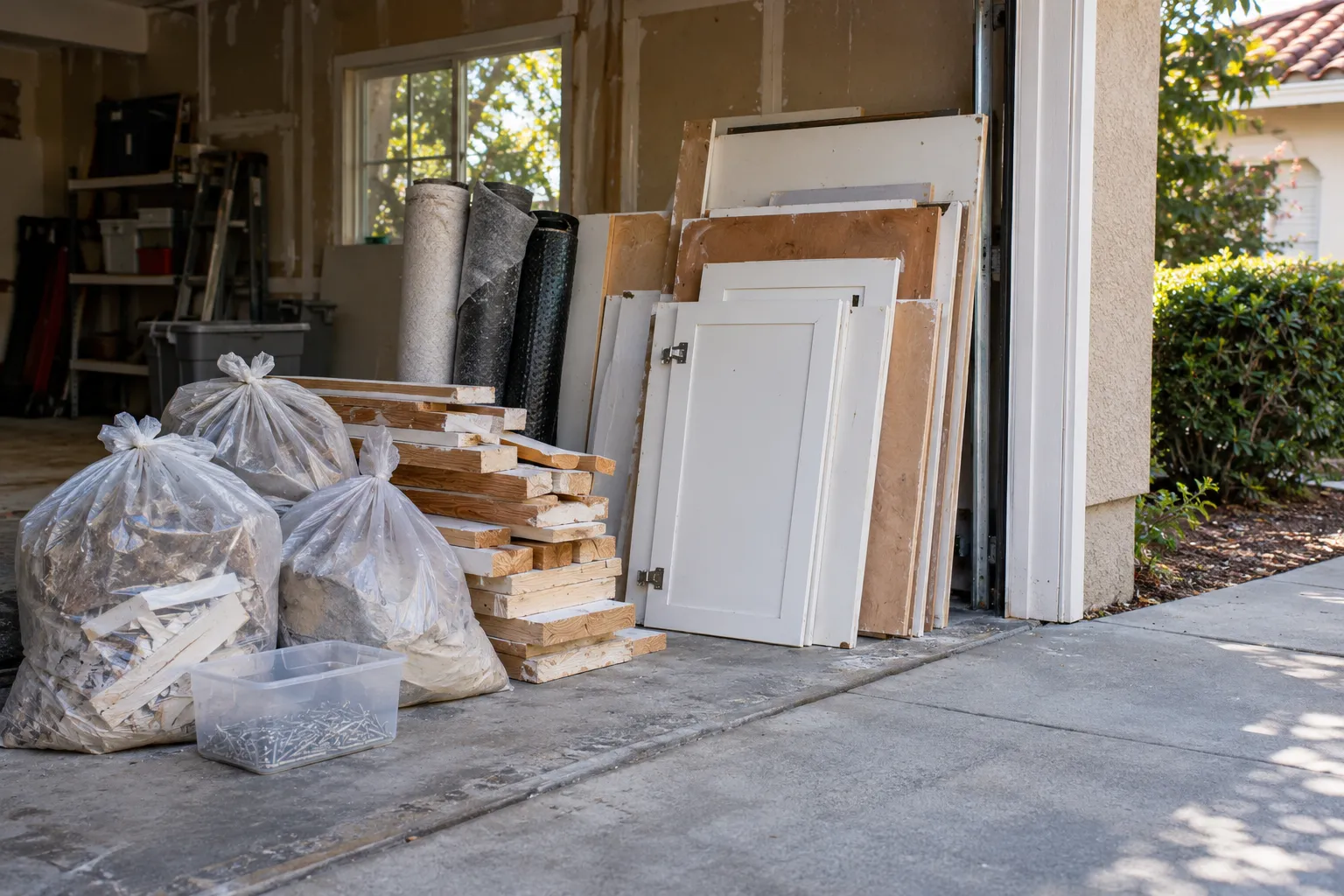
Start with one clean loading route
Move vehicles, hoses, loose tools, and finished materials away from the path between the pile and the truck. Keep debris at ground level. If the crew must pass through a building, describe stairs, narrow doors, and protected surfaces before scheduling.
Separate by risk, not just by room
Keep paint, solvents, batteries, propane cylinders, pressurized containers, electronics, and anything asbestos-suspect out of the construction pile. Put sharp fragments in rigid containers and isolate dense masonry from lighter wood and drywall.
Make the pile legible in photos
Take one wide photo showing the whole pile, one photo with a familiar object for scale, and close-ups of dense or unusual material. Honest photos make the estimate more useful than a carefully framed image that hides half the load.
Leave room for a change of plan
Renovations uncover surprises. Keep an overflow area available and send updated photos when the material mix changes materially.
This guide uses public information from EPA C&D material guidance. Confirm current local and project-specific requirements with the responsible authority.